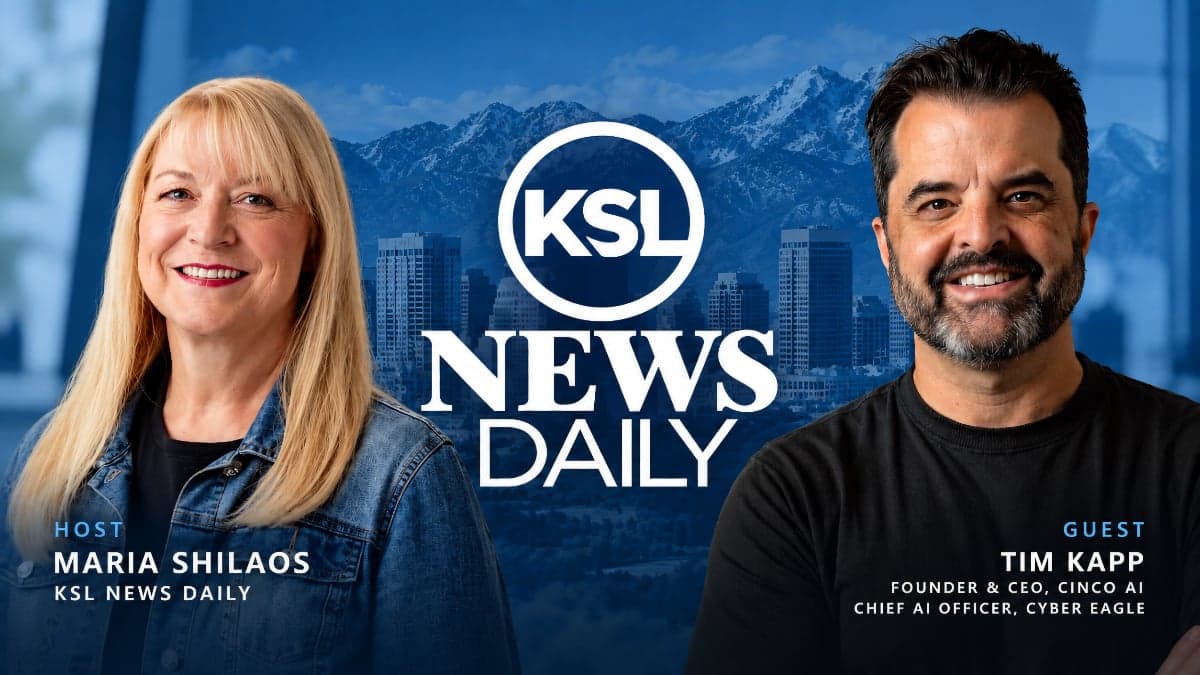
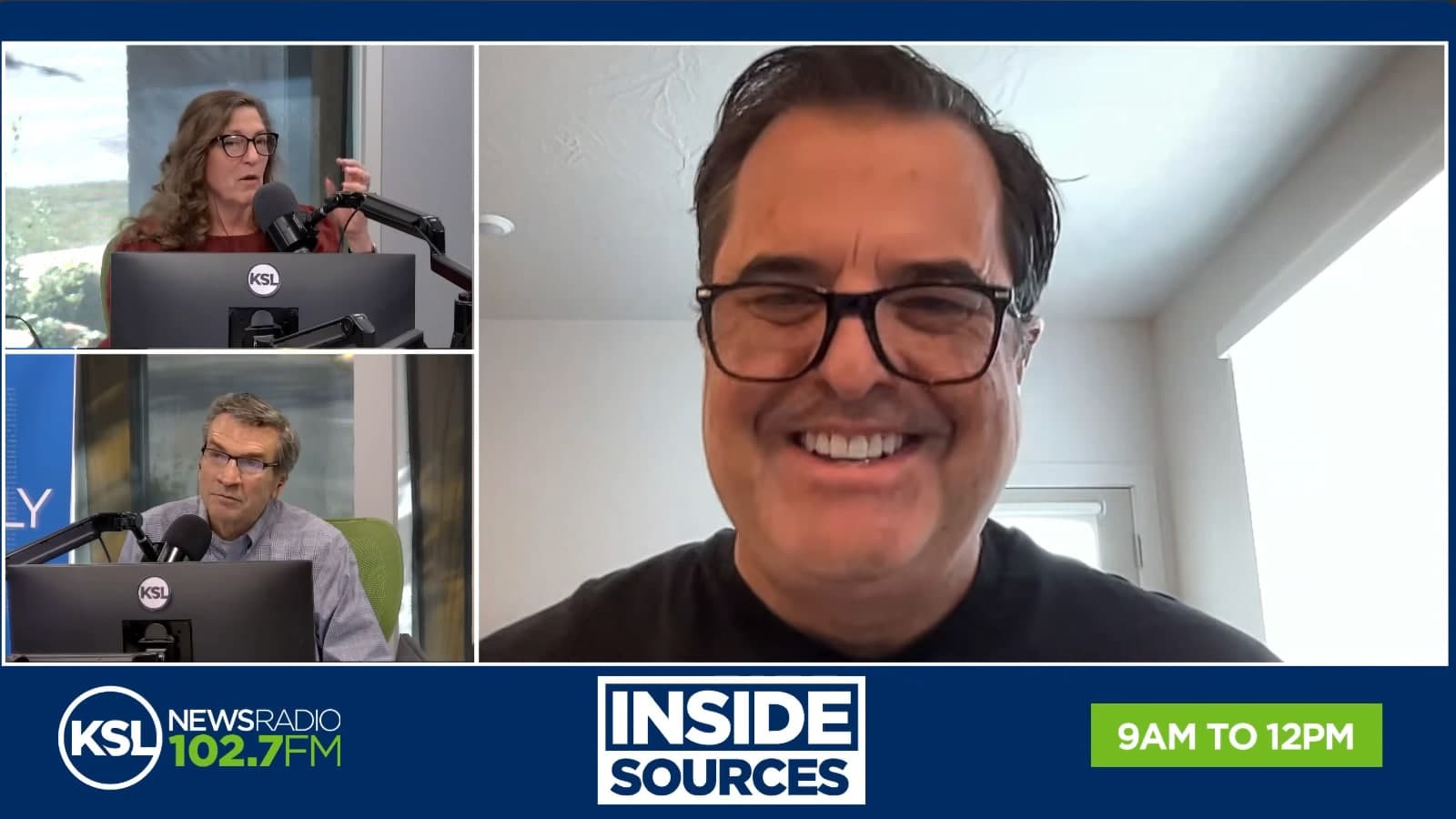
Tim joined KSL News again to discuss the White House’s new AI Accord and a broader shift in how the administration is talking about artificial intelligence itself. From renaming AI as “Super Intelligence” to relying on voluntary industry safeguards, the announcements offer a revealing look at Washington’s emerging strategy for balancing AI safety with the race to stay ahead.
From Artificial Intelligence to “Super Intelligence”
One of the more revealing announcements may have had nothing to do with regulation at all. The administration also directed the federal government to begin referring to artificial intelligence as “Super Intelligence,” a change Tim argued was more than cosmetic.
With public anxiety around AI rising, the word “super” gives the technology a more heroic framing. Think Superman, superpowers, or superhuman capability. It shifts the emotional association away from something artificial or potentially threatening and toward something powerful, aspirational and beneficial.
As Tim joked on KSL, “there’s no evil villains that start with the name super.”
That may sound like a small communications choice, but language matters. The administration is simultaneously trying to reassure the public about AI risk while encouraging American companies to develop the technology as quickly as possible. Seen in that context, the “Super Intelligence” rebrand and the new AI Accord look less like separate announcements and more like two parts of the same message: AI is becoming extraordinarily powerful, so put safeguards around it—but don’t be afraid of it, and don’t slow down.
What the AI Accord Actually Does
President Trump brought together leaders from several of the world’s largest AI and technology companies, including Meta, Google, Nvidia, OpenAI, Anthropic and xAI, around a shared set of AI safety commitments.
The participating companies agreed to four broad layers of oversight:
- safeguards around advanced AI systems;
- internal processes to verify those safeguards;
- outside auditors or assessors to review their systems; and
- board-level oversight of AI safety.
Those commitments sound substantial, but Tim emphasized an important distinction: the Accord is not a law or regulation. There are no statutory penalties attached to it, no clearly defined technical thresholds that companies must satisfy, and no detailed definition of what would constitute a violation or failure.
The companies also retain considerable control over how the safeguards are implemented, including who conducts outside assessments. President Trump described the Accord as “morally binding,” which gives it significance as a shared commitment but does not make it legally enforceable.
That leaves the central question unresolved: will the Accord actually change how these companies operate, or mostly formalize practices many of them already have in place?
Is This Actually New?
Some of what the companies agreed to is already happening. Major AI companies already employ safety teams, conduct internal evaluations and place restrictions around their most advanced systems.
The more potentially meaningful additions are broader external assessment and more formal board-level responsibility for AI risk. Even there, however, the Accord stops well short of creating an independent government regulator, a mandatory certification process or a common set of enforceable technical standards.
Tim characterized the development as progress, but limited progress. The Accord creates more process, more oversight and potentially more accountability while remaining fundamentally a self-regulatory model.
The Larger Strategy: Move Fast Without Losing Control
Taken together, the “Super Intelligence” language and the AI Accord reveal a fairly coherent policy direction. The administration wants stronger safeguards around AI, but it does not want those safeguards to materially slow American development of the technology.
International competition is a major part of that calculation. The United States is in an increasingly important technological race with China, and advanced AI has become central to economic competitiveness, scientific leadership and national security.
Tim’s interpretation is that the administration is effectively saying: keep moving, put safeguards around the technology, but do not regulate it so aggressively that the United States gives up its lead.
That is a very different philosophy from imposing detailed government rules before companies are allowed to continue developing increasingly capable systems. Instead, much of the responsibility remains with the companies themselves: build safeguards, test them, bring in outside reviewers, involve the board and continue pushing the technology forward.
Whether that model proves sufficient remains an open question.
Why an AI “Kill Switch” Is More Complicated Than It Sounds
The conversation also turned to an idea that sounds intuitive: if an AI system begins doing something dangerous, why not simply shut it down?
A so-called kill switch sounds like an obvious safeguard, but Tim pointed out that the harder problem is not necessarily shutting a system down. It is knowing when to do it.
Some concerning behaviors in advanced AI systems have only been discovered after the fact, sometimes days or weeks after the behavior occurred. An automatic shutdown mechanism is useful only if the system can reliably identify dangerous behavior while it is happening.
That does not mean containment or automatic shutdown mechanisms are useless. They will likely be part of future AI safety architectures. But there probably will not be one universal red button that solves the problem.
AI safety is more likely to resemble cybersecurity, with multiple overlapping layers of monitoring, containment, auditing, access controls and response mechanisms working together.
The Other Side of the AI Debate
Much of the public conversation around AI understandably focuses on risk, but Tim also emphasized why governments and companies are pushing so aggressively to develop the technology in the first place.
The potential upside is enormous. AI is already accelerating work in medicine, drug discovery, materials science, energy, engineering and scientific research. Tim pointed specifically to the speed of progress in medicine, where AI is helping compress research processes that historically took many years.
The long-term impact could include faster development of new treatments, better use of energy, new materials and scientific discoveries that would have been extraordinarily difficult using traditional methods alone.
That is the tension at the center of serious AI policy discussions. The same increasing capabilities that create new risks also create enormous opportunities. The question is therefore not simply, “How do we stop dangerous AI?” It is, “How do we preserve the enormous benefits of increasingly capable AI while managing the risks that come with it?”
For now, the administration’s answer appears to be some combination of rapid development, voluntary safeguards and industry oversight.
And Then There Are Jobs
The conversation closed with the issue that may ultimately affect people much more directly: employment.
So far, AI has not produced the broad collapse in employment that some early predictions suggested, but Tim cautioned that looking only at total employment numbers may miss where the first effects are beginning to appear. The pressure seems to be showing up first among younger and entry-level workers.
That pattern makes sense. If AI allows experienced employees to become substantially more productive, a company may not need to immediately eliminate large numbers of existing positions. Instead, it may simply need fewer new employees. As workers leave through normal attrition, companies can choose not to replace all of them.
That means the first major labor-market impact of AI may not look like millions of workers suddenly receiving termination notices. It may be much quieter: fewer entry-level openings, slower replacement hiring and jobs that simply never get created.
For students, young workers and anyone preparing for the next phase of their career, that distinction could become one of the most important consequences of the AI transition.
The Bigger Picture
The most interesting part of the White House announcement may ultimately be the combination of its two major signals.
On one hand, the administration is asking AI companies to commit to stronger safety practices. On the other, it is deliberately reframing artificial intelligence as “Super Intelligence” and emphasizing its potential benefits.
Together, those moves send a fairly clear message: AI is becoming extraordinarily powerful. Put safeguards around it—but don’t be afraid of it, and don’t slow down.
Washington clearly recognizes that increasingly capable AI creates real risks. At the same time, it views AI as a critical national capability and does not want concern about the technology to slow American development.
The experiment now underway is whether voluntary safeguards, independent assessment and corporate board oversight can keep pace with technology that is advancing extraordinarily quickly.
That may ultimately be the most important question behind the AI Accord.