It’s 8 p.m. on a Saturday. My grandson just announced he can’t sleep without his shark pajamas. If you’ve ever had a night like that, you know the small miracle of tapping your phone twice and having pajamas arrive an hour later.
Now here’s the weird part: GDP doesn’t care. Neither does the Consumer Price Index (CPI).
The pajamas cost the same as they did last week. GDP records the transaction—but it’s blind to the speed, convenience, and stress it erased. CPI sees no “inflation.” And yet your life just got dramatically better: faster, smoother, stress-free.
That’s value—real, tangible value. But it’s invisible to the statistics that run our world.
The Numbers That Time Forgot
GDP and CPI were designed for a world of steel mills, not streaming services.
GDP adds up everything we buy and sell. It’s basically a cash register for the economy.
CPI tracks how prices for a fixed basket of goods change over time, telling us if life is getting more expensive.
Both work fine if you live in 1957. They don’t work so well if you live in 2025 and half your life runs on free apps, AI assistants, instant delivery—and your new robot vacuum costs less than your old upright but also does the vacuuming for you.
GDP and CPI measure what costs money, not what matters.
The entire digital and AI economy has been built on non-price value—convenience, speed, knowledge, personalization, time saved. GDP and CPI barely count any of that.
Where Did the Missing Value Go?
Here’s the trillion-dollar question: if all this stuff is so valuable, why are we giving it away? Because the internet rewrote the old rules and now AI is dogpiling on. Instead of charging you upfront, companies play a different game. They make money through ads, data, or premium upsells. In other words, you’re not paying with dollars—you’re paying with your attention or your data (and while ad spending does show up in GDP, it’s only a sliver of the real value being created).
Even more important than the new business models, digital goods have almost zero marginal cost. Once a movie, song, or app exists, giving it to one more person costs nothing, so the price naturally drops toward zero.
In the digital economy:
- Attention became currency. You don’t pay with cash—you pay with your time, clicks, and data.
- Advertising became GDP’s loophole. Platforms like Google and Meta record ad revenue, but not the vastly larger value those services create for users.
- Marginal cost collapsed. Once a product is digitized, distributing it is virtually free—so prices spiral toward zero while utility soars.
The result? Massive consumer surplus that never touches GDP.
Research by MIT economist Erik Brynjolfsson and his collaborators estimates that the median American would need to be paid roughly $17,500 a year to give up internet search, about $8,000 to give up email, and around $3,600 to give up digital maps—value that never appears in GDP. All of that value exists outside the economy’s official scoreboard.
In short, the value is still there—it’s just hiding in plain sight, funded by other means, or wrapped inside services that are far more powerful than their 1980s counterparts. Our old-school metrics just aren’t built to see it.
Streaming: The Free Lunch That’s Eating GDP
Thirty years ago, if you wanted to watch The Godfather, you either:
- Bought a VHS for $20
- Or rented it for $3.99 at Blockbuster (and hoped you remembered to rewind)
But that wasn’t the whole price. You also had to get in the car, drive to the store, wander the aisles trying to find a copy, and then return it. That’s what economists call “search cost” or “transaction cost”—all that extra time and effort that doesn’t show up on a price tag but definitely shows up in your Saturday night.
Today, you open Netflix, Disney+, or YouTube, and bam—instant access to more entertainment than all the movie theaters in history combined. Not only that, they take on the whole job of your friendly neighborhood video store clerk of helping you find the best movies (some of you will remember).
For roughly the same monthly price, the quality, convenience, and volume of content have exploded. In GDP terms, the transformation barely registers. Netflix is a line item just like Blockbuster was. Same dollars, same “output.”
From an accounting point of view, we destroyed value. From a human point of view, we created abundance.
GDP, meet the streaming paradox.
The Inflation of Knowledge
Now, let’s talk about AI. If the digital economy started the fire, AI is about to pour gasoline on it.
We used to talk about inflation of prices. Now we’re seeing an inflation of knowledge—a world where information, creativity, and expertise are becoming as abundant as printed paper. AI is essentially a printing press for knowledge—flooding the market with zero-cost intelligence.
How big are we talking? Analysts estimate AI could add on the order of $22–25 trillion to global GDP by 2035, and as much as $35–40 trillion by 2040. That’s roughly equivalent to adding the combined economies of China, Japan, Germany, the U.K., France, and India to the world economy.
But here’s the paradox: while AI will expand measured GDP dramatically, much of its real value will still slip through the cracks. In other words, the $22–25 trillion is much less than the value we’ll actually create. When AI makes knowledge, creativity, and expertise essentially free, GDP rises more slowly than our quality of life. We’ll get both—a bigger economy and a bigger blind spot.
Just as streaming made entertainment abundant, AI will make expertise abundant—and both stretch the limits of what GDP can see.
When Policy Fights Phantom Dragons
Here’s where things get messy. When CPI can overstate inflation—because many quality improvements, especially convenience, speed, and zero-price digital services, are difficult to capture with traditional methods—or when GDP understates real value creation, policymakers can end up fighting phantom dragons.
They see “rising prices” on paper and tighten interest rates—or they see “weak growth” in the charts and scramble for stimulus—even though real living standards may be quietly improving beneath the surface.
In fact, there have been times when modest (or below-trend) growth and persistent inflation occur together—the economy slows while prices stay elevated. That combination creates a double illusion—too much inflation and too little growth—leaving central banks confused and financial markets in a whipsaw. Investors can’t tell whether to brace for a slowdown or a rate hike, and policymakers end up reacting to ghosts in the data instead of the real economy.
The danger isn’t just mismeasurement—it’s misguided policy built on ghosts.
When “More” Looks Like “Less”
Here’s the twisted part: in GDP-land, when things get cheaper or free, it looks like the economy is shrinking.
- If Spotify wipes out CD sales, but makes streaming those same songs less expensive and more convenient, GDP falls.
- If Zoom kills business travel, but now records and summarizes those meetings for less, GDP falls.
- If AI replaces your accountant, but the same job gets done faster, measured GDP in that activity falls.
We’re living through one of the greatest expansions of human utility in history—and the spreadsheets say we’re stagnating.
It’s as if the economists are staring at an empty Blockbuster store, completely missing the fact that everyone’s home watching Stranger Things.
How Do We Fix It?
Economists aren’t blind to the problem—they’re just working on new tools to fix it. Instead of relying on the same old GDP yardstick, they’re developing new ways to measure value:
- GDP-B (for “benefit”) – adds the value of free and improved digital goods to GDP.
- Digital Economy Accounts – track the true size of the digital sector.
- Well-being Dashboards – measure happiness, health, and time saved alongside income.
Right now, these metrics are mostly experimental. A few countries and organizations are publishing them, but they’re not yet taken as seriously as traditional indicators. New Zealand even uses well-being metrics in its national budget.
Interestingly, Bhutan was ahead of the curve decades ago with its Gross National Happiness Index—often dismissed as a feel-good gimmick at the time. But looking back, it was a profound recognition that our metrics were drifting away from true value. What once seemed quaint now looks prophetic.
Bhutan wasn’t being sentimental—it saw a future the rest of us missed.
In short, these are steps in the right direction. The real fix is to stop treating spending as the only sign of progress. In a world where AI can generate art, advice, and love songs on demand, spending less might actually mean living better. The challenge isn’t choosing between “hard” metrics and “soft” ones—it’s learning how to measure meaning with the same seriousness we once reserved for steel output.
Wrapping It All Up: From Measurement to Meaning
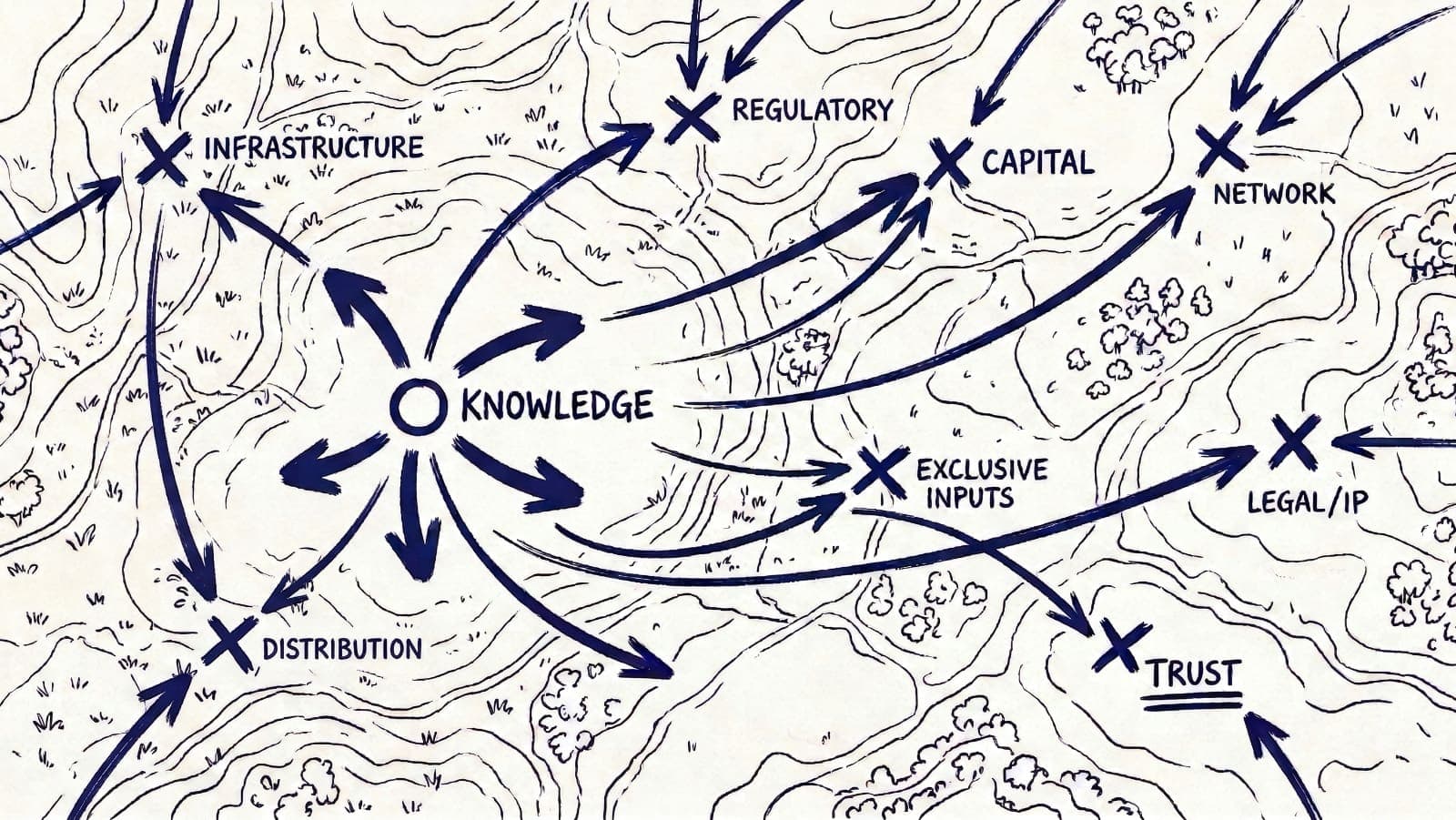
In the end, what we measure shapes what we see—and what we see shapes the policies we create. Right now, GDP and CPI are like old maps that show only half the territory.
They miss the invisible miracles of the digital and AI economy. They don’t see the bedtime saved by one-hour pajama deliveries or the free education delivered by an AI tutor.
But the good news is, new metrics are on the horizon. They’re not mainstream yet, but they’re coming. And as we start to measure the real value of convenience, knowledge, and time, we’ll get a much clearer picture of the world we’re actually living in.
The future of economic measurement is about adding meaning to our metrics.
And once we do that, we’ll be able to see—and shape—our economy in a way that truly reflects how we live and thrive.
In the meantime, while we’re waiting for those new metrics to catch up, just remember: every time your grandson’s shark pajamas arrive in an hour, you’ve outsmarted GDP. The economists might not count it, but you’ll know you’ve added a little bit of magic to the bedtime economy. And that’s a value no old-school metric can take away.